

Chet Baker
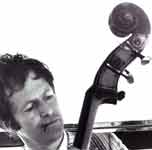
The American trumpeter Chet Baker had a rough time in his life. From being the new star of jazz in the 1950s, looking a lot like James Dean and playing a bit like Miles Davis, he spiralled down through a life of drugs and jail and being beaten up by drug dealers - I can remember at the time coming across a piece onChetBaker in a woman’s magazine called “Ten Thousand Hell-Holes In My Arm”, which I always thought was rather a good title. Moving to Europe, he later came to control if not exactly beat his drug habit and had a renaissance in the 1980s, now looking more like Jack Palance than James Dean. Finally re-established, he fell to his death in 1988. From a window in an Amsterdam jazz club, as I recall. And now, posthumously, there is worse to come. He is probably to be played in a forthcoming Hollywood film by Leonardo di Caprio.
Anyone who has been around jazz history a bit will recognise why Hollywood might be attracted to his life ( and ignore the fact that there is already a very good film about his life called “Let’s Get Lost” ). Hollywood likes a soft-centred jazz story with a bit of bittersweet tragedy worked in. There was “The Glenn Miller Story”, in which James Stewart as Glenn Miller died somewhere over the Channel trying to reach France in a brave mission to bring regimented dance music to the liberated French. There was “Young Man With a Horn”, in which Kirk Douglas created a fictionalised view of Bix Beiderbecke’s life and bad times. There was “The Benny Goodman Story”, in which Benny Goodman didn’t die at all in the film, because he was still alive in real life, which must have distressed Hollywood........
I wonder if anyone has noticed something that all these films have in common. Well done ! All the subjects are white musicians.
Not until Bernard Tavernier made “Round Midnight” and Clint Eastwood made “Bird” did a black jazz hero become the subject of a film, which is odd, because jazz is a black music. Film, however, is not a black industry, and Hollywood is not a black-oriented place, so it is not surprising that Hollywood’s view of jazz has almost always been through white-tinted spectacles.
Chet Baker is white already, which is great. And it is true that he was popular in the 1950s, and had college boy looks like James Dean’s, and was a symbol of cool jazz, West Coast jazz, Californian jazz, and all that. But I really think someone ought to step in before it’s too late, and say that it didn’t go a lot further than that - that Chet Baker was not a jazz giant, not even an icon. A pin-up, yes. Icon, no.
I was only a kid at the time of his greatest fame, and I remember Chet Baker being thought a bit too lightweight by the jazz crowd even then. I did buy jazz records with Chet Baker on, purely because they were by the ingenious Gerry Mulligan Quartet. Chet Baker played some nice counterpoint with Mulligan, and had a wispy, little boy charm and a pure tone which I quite liked, but a little of it went a long way, and I can clearly remember preferring the trumpeter who replaced Chet Baker with Mulligan, Jon Eardley. Jon Eardley, as far as I know, moved to Europe shortly afterwards and stayed on the mainland ever since, leading a respectable life, and thus will never have his life story filmed by Hollywood.
To be honest, the reason that Chet Baker became famous was that the media wanted a white jazz musician they could publicise at a time when modern jazz was hip. Just as Elvis Presley fulfilled the dreams of the pop music industry - who yearned for a white boy who could sing like a black man - so Chet Baker came at the right time for the public face of jazz. The mass public has always preferred a safe white equivalent. Bix Beiderbecke was preferred by white audiences to Louis Armstrong, Harry James was preferred to Roy Eldridge, and Chet Baker was top of the polls ahead of Miles Davis, Fats Navarro, Dizzy Gillespie and all the black guys who were streets ahead of him.
( Like Clifford Brown, for instance, a truly astonishing trumpeter whose poise and grace, whose agile imaginings, still sound heartachingly good forty or fifty years later. He was born a year later than Chet Baker. He died in 1956 at 26, killed in a car crash. He was black. He was not known to be much into drugs. He will never have his life filmed. )
However, if Hollywood wants Leonardo to be Chet Baker, I expect it will go ahead and make Leonardo into Chet Baker. The last time Leonardo was in the news was because the film he was making in Thailand involved some rearrangement of the Siamese landscape. Don’t be too surprised if this one involves some nifty rearrangement of the shape of jazz history.
Comment - The Independent Tues Apr 13 1999